
Exhibit Installation Services for Trade Shows and Exhibitions
Exhibits are the physical centre of many trade show and exhibition presentations. They bring together structures, display systems, graphic surfaces, product presentation units and other components to create a defined space for showcasing products, services and brands. Before an exhibition opens, these individual elements need to be assembled, positioned and prepared according to the project documentation.
TRADE SHOW INSTALLATION provides practical support for exhibit installation services at trade fairs, exhibitions and other business events. Depending on the agreed scope, installation activities can include assembling exhibit structures, fitting panels and graphics, positioning display units, installing furniture and completing defined finishing tasks.
The service is intended for exhibit houses, exhibition stand builders, trade show contractors, agencies and exhibitors that require additional installation capacity or an external execution partner for specific on-site work packages.
Exhibits can range from compact product displays and modular presentation systems to large custom-built structures integrated into an exhibition stand. Each project has its own construction details, component requirements, installation sequence and venue conditions. The appropriate setup process therefore depends on the supplied components, current drawings, assembly instructions and agreed responsibilities.
Whether the assignment involves assembling an individual exhibit, installing several display structures or supporting the setup of a larger exhibition environment, the required work can be assessed individually according to the project scope, location, schedule and availability of suitable resources.
Our Services:
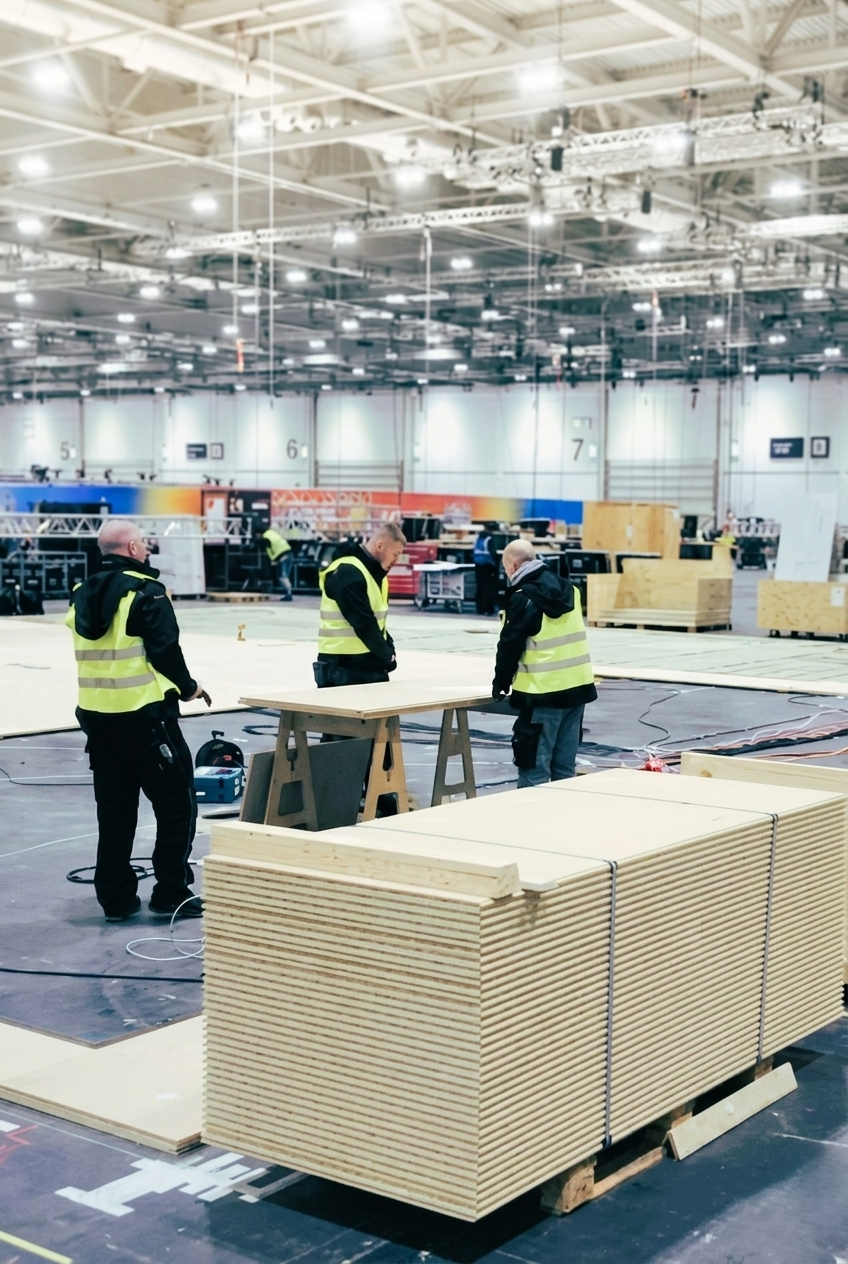
Installation Services
Our installation services cover everything required to set up your trade show booth efficiently and accurately across Europe and the UK. From modular booths to complex double-deck structures, we ensure your designs are brought to life with precision and professionalism.
Our Services Include:
Booth Installation & Setup: Modular booths, custom island booths, and double-deck structures.
Graphics & Signage Installation: Mounting banners, large-scale visuals, and branded elements.
Lighting & AV Integration: LED walls, video screens, sound systems, and interactive displays.
Furniture & Props Installation: Counters, seating, display cases, and demonstration equipment.
On-Site Supervision & Quality Control: Dedicated project managers ensuring correct installation and compliance with venue rules.
Technical Support: Interactive kiosks, VR/AR setups, cabling, rigging, and electrical setup.
Benefits of Our Installation Services:
Accurate translation of your booth designs into reality
Fully operational, visually engaging exhibits
Reduced downtime and stress for your team
Seamless, professional setup at all European trade show venues
With TRADE SHOW INSTALLATION, your booth is installed efficiently, professionally, and ready to impress every visitor.
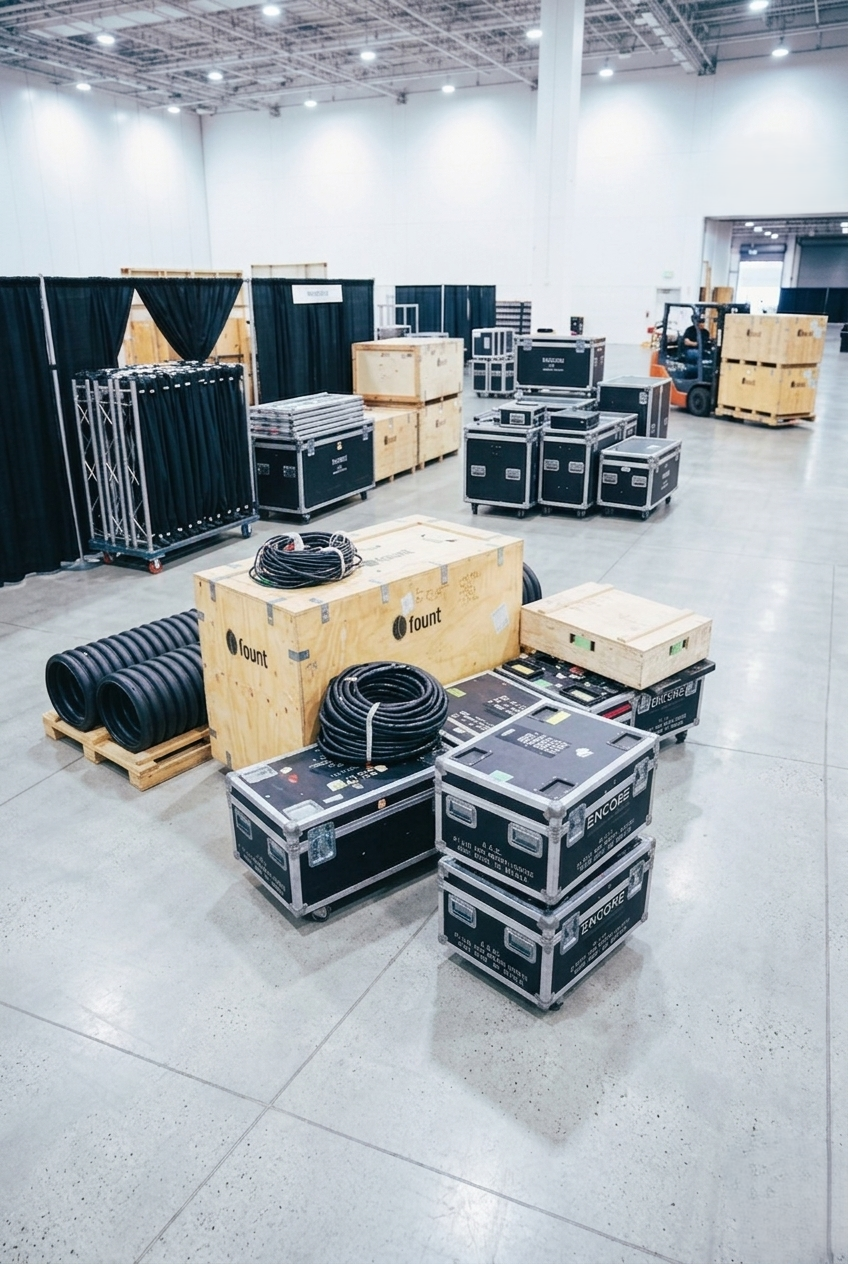
Dismantle & Post-Show Services
Our dismantle services ensure your trade show booth is safely taken down, packed, and prepared for transport or storage after the show. We handle every step with precision and professionalism, protecting your investment and making post-show logistics simple.
Our Services Include:
Systematic Booth Dismantle: Safe teardown of modular and custom booths, graphics, AV systems, lighting, and props.
Packing & Labeling: Organized preparation of all components for shipping or storage, reducing risk of damage.
Freight Coordination: Liaison with your logistics provider, warehouse, or shipping company for seamless transport.
Venue Compliance: Clearing the exhibition space according to deadlines, rules, and local regulations.
Post-Show Reporting: Documentation of any damages, logistical notes, and recommendations for future shows.
Benefits of Our Dismantle Services:
Protects your investment and reduces risk of damage
Simplifies shipping or storage of booth components
Ensures smooth venue exit and compliance
Reduces stress and downtime for your team
Provides detailed feedback for future improvements
With TRADE SHOW INSTALLATION, your booth is dismantled efficiently, professionally, and safely — giving you peace of mind and a smooth post-show experience.
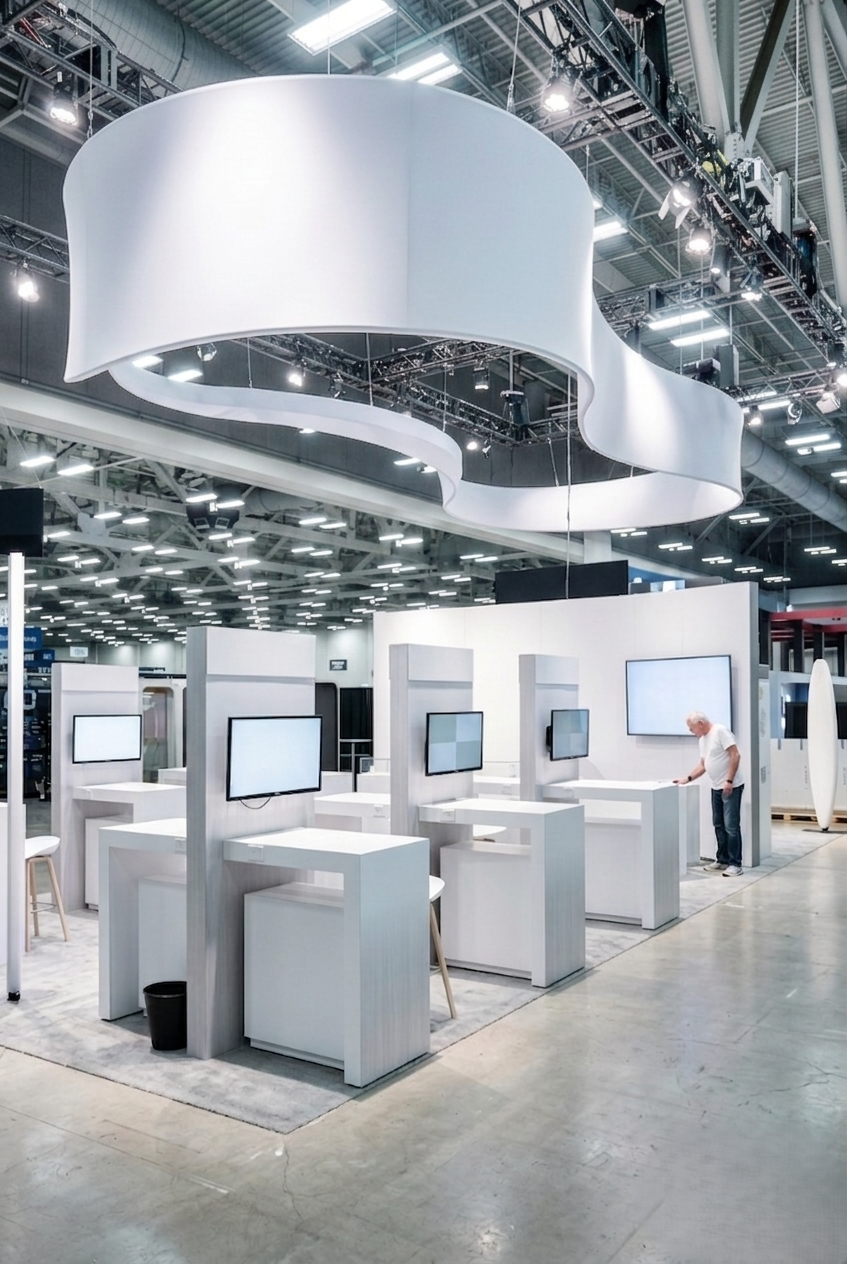
Turnkey I & D Solutions / Partner Services
Our turnkey I & D solutions provide a full, end-to-end service for exhibit companies, stand builders, and agencies, acting as your trusted European installation and dismantle partner. From pre-show planning to post-show wrap-up, we manage every detail so your team can focus on your clients and brand.
Our Services Include:
Pre-Show Coordination: Crew scheduling, logistics planning, venue regulations, and contingency management.
Turnkey Installation & Dismantle: Complete I&D service with one dedicated project manager overseeing all phases.
Technical & On-Site Support: AV setup, lighting, rigging adjustments, and troubleshooting during the event.
Multi-Venue Management: Seamless support for exhibitions across multiple European cities and venues.
Custom Partner Solutions: Acting as your on-site extension, maintaining brand standards, and reporting directly to your team.
Benefits of Our Turnkey & Partner Services:
Single point of contact for entire projects, reducing complexity
Consistent, high-quality execution across all European venues
Cost-efficient, risk-reducing solutions for complex, multi-booth events
Flexible crew scaling for multi-booth or multi-venue projects
Confidence and peace of mind when managing international exhibitions
With TRADE SHOW INSTALLATION, your turnkey projects are executed professionally, efficiently, and flawlessly, providing a reliable European partner for every trade show.
What Are Exhibit Installation Services?
Exhibit installation services cover the practical assembly, fitting and positioning of physical exhibits and their associated presentation components. The objective is to prepare the supplied structures and display elements for use at a trade show, exhibition or other presentation environment.
The term exhibit can refer to different types of physical presentation elements. Depending on the project, it may describe an individual product display, a modular exhibit system, a custom-built presentation structure or a larger exhibition installation.
Typical installation activities can include:
- Unpacking and organising supplied exhibit components where included in the scope.
- Assembling modular exhibit systems and frame structures.
- Installing wall panels, partitions and display surfaces.
- Assembling custom-built exhibit structures.
- Fitting cladding, decorative panels and finishing elements.
- Installing printed graphics and fabric display surfaces.
- Assembling product stands, plinths and presentation units.
- Positioning counters, cabinets and display furniture.
- Installing shelves, storage elements and display accessories.
- Aligning and adjusting visible exhibit components.
- Completing agreed finishing activities.
- Preparing installed exhibits for handover to the responsible project contact.
- Dismantling and post-show handling where agreed.
The actual scope depends on the type of exhibit, the installation documentation and the responsibilities assigned to each project participant. The agreement should define which components are included, which materials and tools are supplied, and which activities remain with the main contractor or specialist suppliers.
Exhibit Assembly and On-Site Installation
Exhibit assembly involves turning individual components into a complete physical presentation structure. The work sequence depends on the construction method, the relationship between components and the installation instructions supplied for the project.
Some exhibits are based on standardised reusable systems. Others consist of individually manufactured structures with specific dimensions, finishes and connections. In both cases, the installation process should follow the current project documentation and the requirements of the exhibition venue.
Exhibit Structure Assembly
The supporting structure defines the shape, dimensions and layout of an exhibit. Depending on the design, it can consist of aluminium profiles, modular frames, panel systems, prepared wooden components or other supplied construction elements.
Installation activities can include assembling the framework, connecting individual sections, positioning wall elements and fitting designated structural components. The work should follow the drawings and instructions provided by the responsible designer, manufacturer or main contractor.
Modular Exhibit Installation
Modular exhibits use reusable components that can be combined into different layouts. Typical elements include profiles, connectors, frames, panels, shelves, counters and graphic surfaces.
Modular exhibit installation can involve identifying the supplied components, assembling the frame system, connecting profiles, fitting panels and installing system-specific accessories. The correct sequence depends on the manufacturer’s instructions and the configuration specified for the exhibition.
Careful handling is important when components are intended for repeated use. Consistent assembly procedures can also make subsequent dismantling, sorting and preparation for future projects easier.
Custom Exhibit Installation
Custom exhibits are developed for specific products, brands, campaigns or presentation environments. They may include individually manufactured wall structures, display furniture, decorative surfaces, counters and non-standard presentation elements.
Installation support can include positioning prepared components, assembling supplied structures, fitting designated panels and completing agreed finishing work. Because custom exhibits can contain unique construction details, current drawings and assembly instructions are particularly important.
Exhibit Panels, Cladding and Finishing Elements
Panels and cladding create the visible surfaces of many exhibits. They can define individual presentation areas, cover supporting structures or provide the background for product information and graphics.
Depending on the construction, installation can involve fitting panels to designated frames, aligning adjacent surfaces and attaching decorative elements. The mounting method should be based on the supplied materials and project instructions.
Exhibit Graphics and Visual Presentation Installation
Graphic elements communicate information and establish the visual identity of an exhibit. They can be integrated into wall structures, display frames, counters, cabinets and individual presentation units.
Depending on the agreed work package, exhibit graphics installation can include:
- Fitting printed panels and graphic boards.
- Installing large-format graphic surfaces.
- Mounting fabric graphics in frame systems.
- Fitting tension fabric display surfaces.
- Applying designated adhesive graphic elements.
- Installing graphics on counters and cabinets.
- Positioning modular graphic panels.
- Aligning adjoining graphic sections.
- Removing or replacing designated graphics where agreed.
Correct orientation, positioning and alignment are important, particularly when several graphic elements form one continuous visual. Surface compatibility and careful handling should also be considered when working with printed panels, textiles and finished surfaces.
Graphic design, artwork preparation and print production are separate activities unless expressly included in the agreement. Electrical connections for illuminated graphics and specialist technical commissioning also require separate clarification.
Product Displays, Plinths and Presentation Units
Individual product displays are often an important part of an exhibit. They provide defined areas for presenting products, samples, prototypes or collections. Depending on the exhibition concept, they can be integrated into a larger structure or installed as separate elements.
Product Display Stands
Product display stands can be manufactured from different materials and designed for individual products or entire product ranges. Their installation may involve assembling supplied components, fitting display surfaces and positioning the completed units according to the project layout.
Display Plinths and Pedestals
Plinths and pedestals create defined presentation positions for individual objects, samples and products. They may be freestanding or integrated into a larger exhibit structure.
Setup activities can include assembling the supplied units, fitting decorative surfaces and positioning them according to the exhibition drawings. Any special requirements relating to product weight, stability or handling should be clarified with the responsible project parties.
Display Cabinets and Shelving Systems
Display cabinets and shelving systems provide organised presentation and storage areas. They can be used for product samples, catalogues, accessories and other exhibition materials.
Installation can include assembling cabinets, fitting shelves, attaching designated panels and positioning the units within the exhibit. Product stocking and final merchandising should be coordinated with the exhibitor or responsible project company.
Interactive and Demonstration Displays
Interactive and demonstration displays are designed to present products, applications or technical information. They can include counters, screens, demonstration furniture, product stands and dedicated display structures.
Physical assembly and positioning of supplied components can be included in an installation package. Device configuration, software setup, network connections, electrical installation and technical commissioning are separate activities unless expressly agreed and carried out by appropriately qualified personnel.
Exhibit Installation Within Larger Exhibition Stands
Exhibits are often integrated into larger exhibition stands rather than installed as independent structures. A trade show stand can combine wall systems, product displays, meeting areas, graphic surfaces, counters and individual presentation units.
In these projects, exhibit installation must be coordinated with the overall stand layout. The positioning of display structures can affect visitor access, sightlines, furniture placement and the relationship between different presentation areas.
Integrated Product Presentation Areas
Product presentation areas can be incorporated into wall systems, counters, shelving structures or dedicated display zones. Installation activities may include assembling the relevant components, fitting surfaces and positioning the display elements according to the supplied drawings.
Exhibit Structures and Booth Architecture
Some exhibition stands contain individual structures that function as separate exhibits within the larger booth. These can include product towers, presentation walls, demonstration islands and branded display environments.
Installation support can cover the assembly and fitting of the defined structures while taking account of their position within the wider booth layout. The main contractor generally retains responsibility for overall project coordination unless other arrangements have been agreed.
Exhibit Installation for Different Booth Configurations
Exhibits can be installed within inline, corner, peninsula and island booth configurations. The available access, position of walls and intended visitor routes can influence the installation sequence and placement of individual display elements.
For more complex structures, the installation plan should define the order in which the main booth elements and integrated exhibits are assembled. This helps coordinate different work packages and reduces unnecessary interference between installation activities.
Exhibit Installation for Different Industries
Exhibits are used across a wide range of industries. Their construction and installation requirements depend on the products being presented, the exhibition concept and the materials used.
Industrial and Manufacturing Exhibits
Industrial exhibitions often feature technical components, machinery displays, product samples and application demonstrations. Exhibits can combine display structures, information panels, counters and designated presentation areas.
General exhibit assembly should be distinguished from machinery installation, lifting operations, technical connections and commissioning. These specialist activities require separate planning and appropriately qualified or authorised parties.
Automotive and Mobility Exhibits
Automotive and mobility exhibitions can include component displays, accessory presentations, product platforms, information structures and branded presentation areas. Installation support may cover the assembly of display units, wall elements, counters and associated graphics.
Vehicle transport, positioning, lifting and specialist product handling should be coordinated separately with the responsible parties.
Technology and Electronics Exhibits
Technology exhibits frequently combine product displays, demonstration counters, screens, graphic panels and modular structures. Their installation can involve assembling the physical display environment and positioning the supplied presentation components.
Electrical connections, software configuration, network integration and technical commissioning should be defined as separate work packages unless they are expressly included and performed by qualified personnel.
Consumer Goods and Lifestyle Exhibits
Consumer goods and lifestyle exhibitions often use shelving, display cabinets, plinths, product stands and decorative presentation structures. Setup focuses on assembling these elements and positioning them to support the intended product presentation.
Medical and Healthcare Exhibits
Healthcare exhibitions can include product displays, demonstration units, information panels and meeting areas. Installation may cover the physical assembly of supplied structures and presentation elements.
Medical equipment commissioning, calibration, electrical connections and other specialist technical tasks require separate clarification and appropriately qualified service providers.
Food, Beverage and Packaging Exhibits
Food, beverage and packaging exhibits can include counters, shelving, display cabinets, product stands and branded presentation surfaces. Setup activities may involve assembling these elements and preparing the physical display areas according to the exhibition layout.
Exhibit Installation Services for Exhibit Houses, Builders and Agencies
Exhibit installation is frequently part of a larger delivery process involving concept development, design, production, logistics and on-site execution. External installation support can help companies allocate defined physical assembly tasks without changing the overall project structure.
For Exhibit Houses
Exhibit houses manage projects that can include reusable systems, custom-built displays and individual presentation structures. Depending on their project schedule, they may require additional installation capacity for selected exhibit components or complete defined work packages.
External support can include modular assembly, installation of display structures, graphic fitting, furniture setup and agreed finishing activities. The exhibit house generally retains responsibility for the wider customer relationship and project coordination unless otherwise agreed.
For Exhibition Stand Builders
Exhibition stand builders may need installation support for individual exhibits integrated into larger booth projects. This can include product display structures, branded walls, counters, shelving systems and custom-built presentation elements.
Clearly defined work packages make it easier to coordinate the installation activities with the production schedule, delivery of components and other on-site contractors.
For Trade Show Contractors
Trade show contractors can commission external support for specific assembly and installation tasks. Depending on the project, this may involve installing several exhibits, assembling modular structures or completing selected areas within a larger exhibition environment.
For Exhibition and Event Agencies
Agencies may coordinate creative concepts, customer communication and event planning while assigning the practical installation of exhibits to external providers. A clear scope of work helps connect the physical setup activities with the wider project schedule.
For Display Manufacturers
Manufacturers of display systems and presentation structures may require installation support when their products are used at exhibitions, trade fairs or brand events. The assignment can involve assembling supplied components, fitting graphics and positioning finished display units at the venue.
For Exhibitors and Brand Owners
Exhibitors may require assistance with installing individual exhibits or preparing a complete presentation area. The scope can be assessed according to the booth concept, supplied components, venue conditions and responsibilities of any existing stand builder or main contractor.
Exhibit Installation During Exhibition Build-Up
Exhibit installation takes place within the build-up period defined by the exhibition organiser and venue. The available time, delivery arrangements and site procedures influence how the work needs to be planned.
Review of Drawings and Component Lists
Before installation begins, the relevant drawings, floor plans, component lists and assembly instructions should be available. These documents provide the basis for identifying the individual elements and understanding their intended position within the exhibit.
Installation Sequence and Work Packages
The installation sequence should reflect the construction of the exhibit. Supporting structures are generally assembled before the components that depend on them, while graphics, furniture and finishing elements are fitted at the appropriate stage.
Where several contractors are involved, the work packages should be coordinated to avoid conflicts over access, working space and installation order.
Venue Access and On-Site Requirements
Exhibition venues can have specific procedures for contractor registration, hall access, working hours, deliveries and the use of equipment. These requirements should be clarified before the installation team arrives.
Component Handling and Material Preparation
Supplied exhibit components should be available and identifiable before the corresponding installation activities begin. Responsibilities for delivery, unpacking, distribution, tools, consumables and access equipment should be agreed in advance.
Progress Reporting and Issue Resolution
During installation, questions may arise regarding missing components, unclear instructions or differences between the supplied materials and the project documentation. A designated contact should be available to clarify requirements and make decisions.
Progress updates and reports about outstanding tasks can help the main contractor maintain an overview of the installation status.
Exhibit Dismantling and Post-Show Handling
After an exhibition, exhibits and their components may need to be dismantled, sorted and prepared for collection or further use. This is particularly relevant for reusable modular systems and display structures that are intended to be installed at future events.
Where included in the agreed scope, post-show activities can involve:
- Disassembly of modular exhibit structures.
- Removal of designated graphic panels and fabric surfaces.
- Dismantling of display stands, plinths and presentation units.
- Disassembly of counters, cabinets and shelving systems.
- Sorting of reusable components.
- Separation of selected materials according to project instructions.
- Preparation of components for collection or further handling.
- Reporting missing or damaged components where identified.
The dismantling sequence should follow the relevant instructions and venue regulations. Transport, storage, waste disposal and recycling are separate responsibilities unless expressly included in the assignment.
For companies that use exhibits repeatedly, organised dismantling can help prepare the components for subsequent projects. Consistent sorting and careful handling can also make it easier to identify individual parts and assess their condition after the event.
Exhibit Installation Services in Europe
International exhibition projects can require installation support at venues in different European countries. Each location may have its own access procedures, organiser regulations, build-up schedules and practical working conditions.
TRADE SHOW INSTALLATION reviews enquiries for exhibit installation projects in Europe individually. Feasibility depends on the country, city, venue, project dates, exhibit construction, required work scope, applicable requirements and availability of suitable resources.
For an initial assessment, the following project information is useful:
- Country, city and exhibition venue.
- Exhibition name and hall information.
- Exhibit dimensions and floor plan.
- Type of exhibit and construction method.
- Drawings, visualisations and assembly instructions.
- List of supplied components and materials.
- Description of the required installation activities.
- Build-up dates and completion deadline.
- Expected working hours and venue access arrangements.
- Information about tools and equipment.
- Details of the main contractor and site contact.
- Whether dismantling or post-show support is required.
This information helps establish the practical requirements and identify the resources needed for the assignment. Project feasibility and availability are confirmed individually rather than assumed for every European location.
How Exhibit Installation Projects Are Organised
A structured process helps define the installation scope, clarify responsibilities and coordinate the work before the exhibition begins. It also provides a common basis for communication between the main contractor, suppliers and installation provider.
1. Project Enquiry and Initial Assessment
The process begins with information about the exhibition, venue, exhibit type, project dates and required installation activities. It should be clear whether the assignment concerns one individual exhibit, several display structures or a defined work package within a larger stand project.
2. Review of Exhibit Drawings and Documentation
Drawings, floor plans, component lists and assembly instructions provide the basis for assessing the work. The documentation should be current and correspond to the components supplied for the exhibition.
3. Schedule and Venue Assessment
The available build-up period, venue access arrangements and required completion time are reviewed. Relevant organiser requirements and site procedures should be clarified before the assignment is confirmed.
4. Definition of Work Packages and Responsibilities
The parties agree which components are included, which installation activities need to be carried out and how the work relates to other contractors. Responsibilities for materials, tools, equipment, instructions and site coordination should be defined.
5. On-Site Exhibit Installation
The agreed assembly and installation activities are performed according to the supplied documentation and venue arrangements. Missing components, unclear instructions or deviations from the planned setup should be reported to the designated project contact.
6. Completion and Handover
After the agreed work has been completed, outstanding items can be communicated to the responsible contractor. Formal inspections, technical approvals and acceptance remain with the parties appointed for these responsibilities unless otherwise agreed.
Responsibilities and Scope of Exhibit Installation
Exhibit installation is often one part of a larger project involving design, production, logistics, technical services and exhibition management. A clear division of responsibilities helps ensure that every participant understands the activities assigned to them.
The main contractor generally retains responsibility for the overall customer relationship and project management, including design coordination, production planning and supplier interfaces, unless different arrangements have been agreed. An external installation provider performs the activities defined within its agreed scope.
Before installation begins, the following responsibilities should be clarified:
- Who provides the latest drawings and assembly instructions.
- Who supplies and identifies the exhibit components.
- Who defines the installation sequence.
- Who is responsible for on-site task allocation and coordination.
- Who provides tools, materials and access equipment.
- Who coordinates other contractors and specialist suppliers.
- Who arranges venue access and contractor registration.
- Which activities require specialist qualifications or authorisations.
- Who reports progress, missing components and installation issues.
- Who carries out inspections and formal acceptance.
- Who organises dismantling, transport and post-show handling.
Electrical installation, rigging, lifting operations, structural engineering, technical approvals and specialist machinery operation are separate unless expressly agreed and carried out by appropriately qualified or authorised parties. These activities should not be assumed to form part of general exhibit installation services.
How to Choose an Exhibit Installation Provider
Choosing an exhibit installation provider requires more than comparing general service descriptions. The relevant question is whether the provider can carry out the required physical assembly tasks within the specific project conditions.
Important selection criteria include:
- Understanding of exhibit construction: The provider should be able to assess the relevant modular or custom-built components and their installation documentation.
- Clearly defined work scope: Included structures, components and activities should be specified before the assignment begins.
- Project-specific availability: Required dates and working hours should be checked for the individual project.
- Installation planning: The proposed sequence should reflect the exhibit design and venue schedule.
- Component handling: Finished surfaces, graphic panels and reusable components may require specific handling procedures.
- Venue requirements: Access arrangements, working hours and organiser regulations should be considered.
- Tools and equipment: Responsibilities for supplying tools and equipment should be agreed in advance.
- Communication: Clear contacts help resolve questions and report progress on site.
- Specialist responsibilities: Technical and regulated activities must be assigned to appropriately qualified or authorised parties.
- Handover arrangements: Completion criteria and responsibility for formal acceptance should be clear.
A suitable provider should be able to assess the assignment realistically, identify open questions and explain which activities are included in its scope. Clear agreements provide a more reliable basis for cooperation than broad service descriptions that leave responsibilities undefined.
Request Exhibit Installation Services
Are you preparing an exhibition or trade show and looking for practical support with exhibit assembly and installation? TRADE SHOW INSTALLATION reviews enquiries from exhibit houses, exhibition stand builders, trade show contractors, agencies, display manufacturers and exhibitors requiring support with defined on-site installation activities.
Whether you need assistance with a modular exhibit, a custom-built presentation structure, product displays, graphic panels or several integrated exhibit components, the required work can be assessed according to the project details.
For an initial project review, please provide:
- Your company and project contact details.
- Exhibition name and venue.
- Country and city.
- Exhibit dimensions and floor plan.
- Exhibit type and construction method.
- Build-up dates and completion deadline.
- Description of the required installation work.
- Drawings, visualisations and assembly instructions.
- List of supplied components and materials.
- Information about tools and equipment.
- Venue access requirements and working hours.
- Details of the main contractor and site contact.
- Whether dismantling or post-show support is required.
Based on this information, the project can be reviewed in terms of its construction, schedule, work scope and resource requirements. Feasibility and availability are confirmed individually for each assignment.
Frequently Asked Questions About Exhibit Installation Services
What are exhibit installation services?
Exhibit installation services cover the practical assembly, fitting and positioning of physical exhibits at trade shows, exhibitions and other presentation environments. Depending on the agreed scope, this can include modular structures, custom-built displays, graphic surfaces, product stands and presentation furniture.
What is included in exhibit installation?
The scope depends on the exhibit design and assigned work package. Activities can include assembling frames and panels, fitting graphics, installing display units, positioning furniture and completing agreed finishing tasks.
What is the difference between exhibit installation and exhibit assembly?
Exhibit assembly generally describes putting individual components together to create a complete structure. Exhibit installation can cover the broader on-site process, including assembly, fitting, positioning and preparation of the exhibit for presentation. The actual scope depends on the project agreement.
What types of exhibits can be installed?
Depending on the project, installation support can cover modular exhibits, custom-built presentation structures, product display units, plinths, cabinets, shelving systems, graphic displays and exhibit components integrated into larger exhibition stands.
Can modular exhibits be assembled at exhibition venues?
Modular exhibit assembly can be assessed according to the system type and supplied instructions. Typical activities include connecting profiles, assembling frames, fitting panels and installing system-specific accessories.
Can custom-built exhibits be installed?
Custom-built exhibits can be reviewed according to their construction, drawings and installation requirements. The responsible manufacturer or designer should provide current instructions for non-standard components and connections.
Can exhibit graphics and fabric displays be installed?
Graphic installation can be included where specified in the work package. This may cover printed panels, fabric graphics, tension fabric systems and designated graphic surfaces. Design, artwork preparation and print production are separate unless expressly agreed.
Can product display stands and plinths be assembled?
Product stands, plinths and pedestals can be included in the installation scope. The work may involve assembling supplied components, fitting designated surfaces and positioning the completed units according to the project drawings.
Can exhibits be installed as part of a larger exhibition stand?
Yes. Individual exhibits can be integrated into larger exhibition stands. Installation activities should be coordinated with the overall booth layout, including wall structures, visitor areas, counters and other presentation elements.
Do exhibit installation services include dismantling?
Dismantling can be included when it forms part of the agreed scope. This may involve disassembling structures, removing graphics, dismantling display units and preparing reusable components for collection or further handling.
Do exhibit installation services include electrical work?
General exhibit assembly does not automatically include electrical installation. Power connections, lighting installation, testing and commissioning are specialist activities that require appropriately qualified personnel and a clearly defined scope.
Who provides the exhibit components and materials?
The supply of components and materials is generally organised by the exhibitor, exhibit house, manufacturer or main contractor. Responsibilities for delivery, unpacking, component distribution, tools and consumables should be agreed before installation begins.
Do you work with exhibit houses and exhibition stand builders?
Enquiries from exhibit houses and exhibition stand builders can be reviewed for individual projects. External support can be defined for modular assembly, custom-built structures, graphic fitting, product displays and other agreed installation activities.
Can exhibitors request exhibit installation directly?
Exhibitors can enquire about practical support for installing individual exhibits or preparing larger presentation areas. The required scope, supplied materials, venue requirements and responsibilities of any existing stand builder or main contractor should be clarified before the assignment begins.
Do you provide exhibit installation services throughout Europe?
European exhibition projects can be assessed individually. Feasibility depends on the country, city, venue, project dates, exhibit construction, required work scope, applicable requirements and availability of suitable resources.
How long does exhibit installation take?
The required time depends on the exhibit dimensions, construction method, number of components, installation activities, available working hours and venue conditions. Drawings, component lists and a clear task description help assess the expected duration.
Can exhibit installation be divided into separate work packages?
Yes. A project can be divided into defined packages covering specific structures, display areas or installation activities. This can help coordinate external providers with the main contractor and other suppliers.
Who is responsible for coordinating exhibit installation?
The main contractor or an appointed site coordinator generally retains responsibility for the wider project and coordination of suppliers unless different arrangements have been agreed. The installation provider performs the activities defined in its agreed scope.
Are transport and storage included in exhibit installation services?
Transport and storage are separate services unless expressly included in the agreement. The parties should clarify who organises deliveries, collection, material handling and any storage required before or after the exhibition.
What information is needed to request exhibit installation services?
Useful information includes the exhibition venue, exhibit dimensions, construction method, installation dates and required activities. Drawings, floor plans, component lists and assembly instructions help establish the work scope more accurately.
How are exhibit installation services priced?
Pricing depends on the project location, exhibit dimensions, construction method, number of components, required activities, installation schedule and resource requirements. Additional equipment or specialist services may need to be assessed separately.
How can I request exhibit installation services?
Provide the exhibition name, venue, exhibit dimensions, construction details, installation dates and a description of the required work. Include current drawings and assembly instructions where possible. The project can then be reviewed according to its scope, schedule and resource requirements.
We are the European Partner for Trade Show Installation & Dismantle.
At TRADE SHOW INSTALLATION, we specialize in trade show installation and dismantle (I&D) services across Europe and the UK.
We support trade show exhibit companies, exhibition stand builders, stand contractors, and agencies from around the world with reliable on-site services, ensuring your booth is built on time, on budget, and on brand.
What We Do
We bring your designs to life with precision and professionalism.
Our services include:
Trade Show Installation & Dismantle (I&D)
Custom & Modular Booth Installation
On-Site Supervision & Coordination
Multi-Show European Support
Why Work With Us
Partnering with TRADE SHOW INSTALLATION means you gain:
Experienced, English-speaking crews across Europe
Reliable execution at major venues in Germany, UK, France, Italy & beyond
Flexible, scalable teams for projects of any size
Competitive pricing without compromising quality
Our Promise
We make European exhibiting effortless — clear communication, fast turnaround, and flawless results.
Your clients deserve excellence. TRADE SHOW INSTALLATION delivers it — every time.
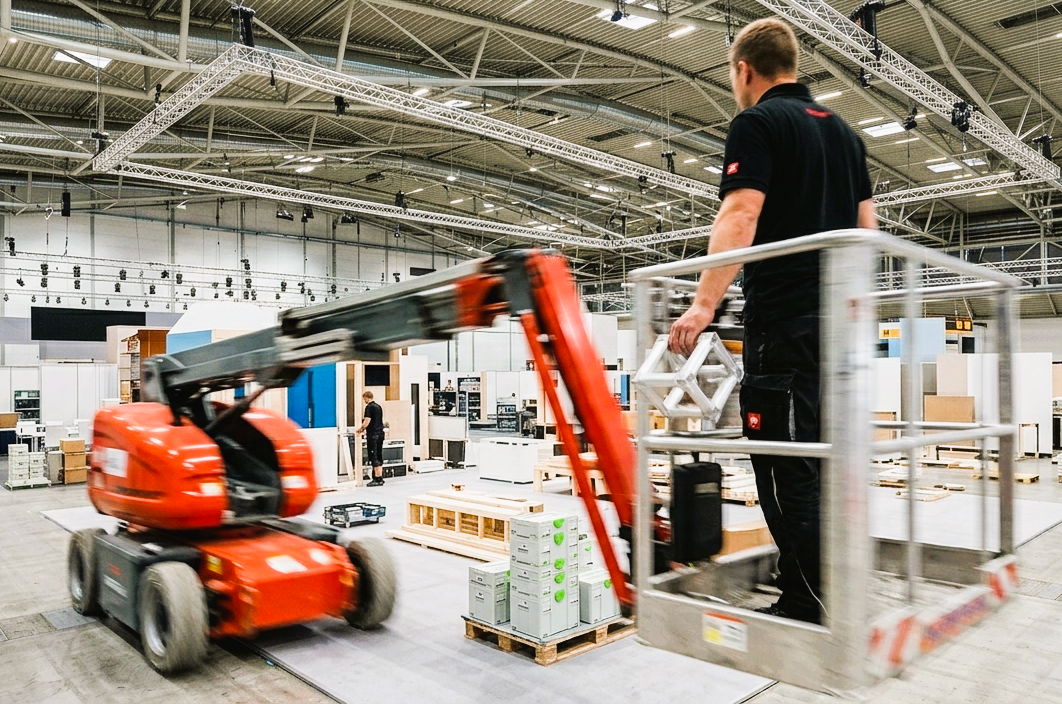
We are serving Trade Show Installation Services in the following countries:
Albania, Andorra, Austria, Belgium, Bosnia-Herzegovina, Bulgaria, Croatia, Cyprus, Czech Republic, Denmark, Estonia, Finland, France, Germany, Greece, Hungary, Iceland, Ireland, Italy, Kosovo, Latvia, Liechtenstein, Lithuania, Luxembourg, Macedonia, Malta, Moldova, Montenegro, Norway, Poland, Portugal, Romania, San Marino, Serbia, Slovakia, Slovenia, Spain, Sweden, Switzerland, Netherlands, Ukraine, Turkey, United Kingdom
We have already provided our services to our customers in the following cities:
Berlin, Hamburg, Hannover, Frankfurt, Dusseldorf, Cologne, Munich, Nuremberg, Stuttgart, Leipzig, Essen, Karlsruhe, Augsburg, Bremen, Freiburg, Offenburg, Friedrichshafen, Sinsheim, Mannheim, Vienna, Graz, Innsbruck, Salzburg, Klagenfurt, Dornbirn, Wels, Basel, Zurich, Bern, Geneva, Lucerne, Lausanne, Davos, St. Gallen, Rome, Milano, Bolzano, Bologna, Verona, Madrid, Barcelona, Alicante, Valenica, Bilbao, Lisbon, Porto, Paris, Lyon, Bordeaux, Lille, Cannes, Marseille, Brussels, Antwerp, Kortrijk, Namur, Amsterdam, Utrecht, Rotterdam, Maastricht, Gorinchem, Herning, Copenhagen, Aalborg, Stockholm, Göteborg, Jönköping, Malmö, Oslo, Stavanger, Bergen, Trondheim, Helsinki, Tampere, Jyväskylä, Warsaw, Poznań, Kraków, Katowice, Gdańsk, Bielsko-Biała, Prag, London, Birmingham, Manchester, Liverpool, Glasgow, Farnborough, Dublin, Belfast and many, many more…